BGMEA DAILY DIGEST
News published in media related to RMG: Today’s RMG News
May 03, 2026


Textile Today
‘BGMEA slashes its members’ service charges by 50%, having solar energy’- President declares while launching Huawei’s new generation C&I BESS 2.0
Bangladesh’s industrial sector is entering a new phase of energy transition. A strong signal came as Bangladesh Garment Manufacturers and Exporters Association (BGMEA) announced a 50 percent reduction in service charges for member factories using solar energy. Mahmud Hasan Khan, President, BGMEA, made the declaration during the launch of Huawei’s new generation Commercial and Industrial Battery Energy Storage System (C&I BESS 2.0) in Bangladesh.The event, held on April 30, 2026, at Radisson Blu Dhaka, brought together industry leaders, policymakers, and technology experts. It focused on the growing importance of energy security and sustainability for Bangladesh’s export-oriented industries. In his closing remarks, the BGMEA President made it clear that energy is no longer a support function. It is now a core business issue.
The Daily Sun
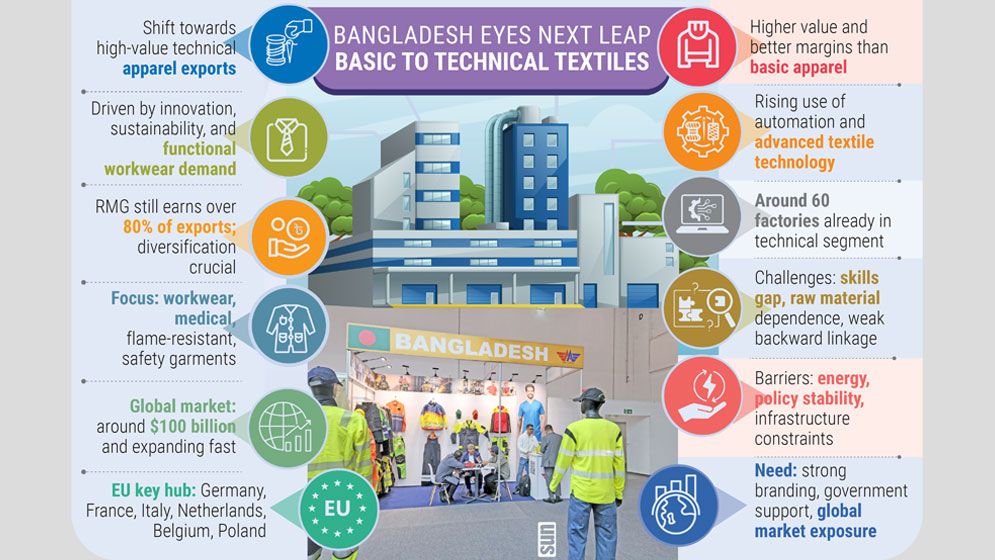
Technical garments emerge as new export focus
Mijanur Rahman, vice president of the BGMEA, said global demand for technical products is rising sharply, but the country’s backward linkage industry remains underdeveloped. “We have to import 95% of raw materials. It is very tough to compete with countries like China,” he said. He added that Bangladesh currently holds only 2% to 2.5% of the $100 billion global technical garments market.Mijanur, who is also managing director of Fabrica Knit Composite Ltd, said international buyers are increasingly prioritising recycled and sustainable products.“We need huge investment to strengthen backward linkage industries. Otherwise, we cannot compete with our rivals. We also need policy consistency, political stability and ease of doing business to attract investors,” he said.Former BGMEA director Mohiuddin Rubel said Bangladesh has no alternative but to move into technical and high-value products.“By producing only basic or low-cost items, we cannot sustain in the global market. Bangladesh has entered a positive transition toward high-value products. Improved infrastructure is needed to unlock future potential,” he said.
The Business Standard
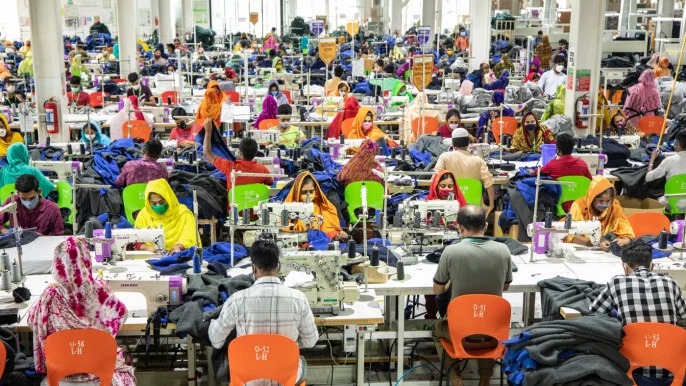
Ctg RMG factories hit by nearly half-shift load shedding; costs rise 20%
Bangladesh's readymade garment sector in Chattogram is facing mounting pressure as prolonged load shedding and rising fuel costs disrupt production, with factory owners claiming a sharp increase in expenses and growing risks to export orders. Former BGMEA vice-president Rakibul Alam Chowdhury said factories are increasingly dependent on alternative fuel sources due to load shedding, driving up production costs. "Over the past two months, rising freight charges, higher container handling costs at inland container depots, and increased transport fares have pushed overall production costs up by more than 20%," he said.SM Abu Tayyab, BGMEA director and president of the Chattogram chapter of the International Business Forum of Bangladesh, warned that the prolonged crisis could severely impact the export earnings. "If the situation continues, small and medium-sized factories may be forced to shut down, leaving hundreds of thousands of workers unemployed," he said.
বণিক বার্তা
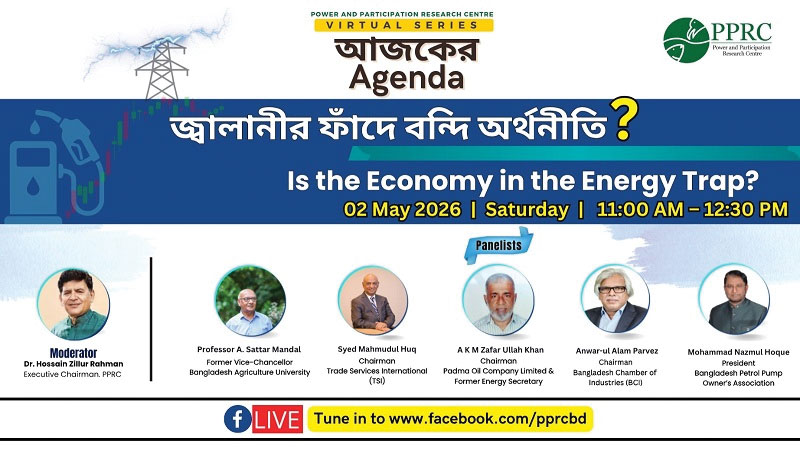
পিপিআরসির ভার্চুয়াল সেমিনারে বক্তারা : জ্বালানি সংকটে উৎপাদন অর্ধেকে নেমেছে, খরচ বেড়েছে ৩০-৩৫%
গতকাল গবেষণা ও সামাজিক প্রতিষ্ঠান পাওয়ার অ্যান্ড পার্টিসিপেশন রিসার্চ সেন্টার (পিপিআরসি) আয়োজিত ‘জ্বালানির ফাঁদে বন্দি অর্থনীতি?’ শীর্ষক ওয়েবিনারে এসব তথ্য ও বিশ্লেষণ উপস্থাপন করেন বক্তারা।বাংলাদেশ চেম্বার অব ইন্ডাস্ট্রিজের (বিসিআই) চেয়ারম্যান আনোয়ার-উল আলম পারভেজ বলেন, ‘এনার্জি হচ্ছে ইঞ্জিন অব ইকোনমি। এনার্জি ছাড়া শিল্প ও সেবা খাতে সামনের দিকে এগোনো খুব কঠিন। জ্বালানি সংকটের কারণে ইন্ডাস্ট্রিগুলোর উৎপাদন ক্ষমতা কমে যাচ্ছে। সক্ষমতার অর্ধেক উৎপাদন হচ্ছে। জ্বালানির মূল্য বৃদ্ধির কারণে পরিবহন ব্যয় বেড়ে যাচ্ছে, এতে উৎপাদন বাড়ছে।’তিনি আরো বলেন, ‘কস্ট অব ডুয়িং বিজনেসে কস্ট অব প্রডাকশন বেড়ে গেছে ৩০-৩৫ শতাংশ পর্যন্ত। উৎপাদন কমে গেছে ৪০-৪৫ শতাংশ। আমি মনে করি, এনার্জি সেক্টরকে সিকিউরড করার জন্য শর্ট-মিড-লং টার্ম পলিসি নিতে হবে। দ্রুত আমাদের কোল (কয়লাভিত্তিক) বেজ প্লান্টগুলোকে সক্ষমতার ভিত্তিতে চালানো উচিত। আদানি ও ভারত থেকে যতটুকু আসে সেগুলো দিয়েও আমাদের ডোমেস্টিক সক্ষমতা ধরে রাখা উচিত। গ্যাসগুলো দিয়ে আমাদের ফার্টিলাইজার থেকে শুরু করে ইন্ডাস্ট্রিয়াল যাদের সক্ষমতা থাকে সেগুলো আমাদের দেখা উচিত।’
The Financial Express
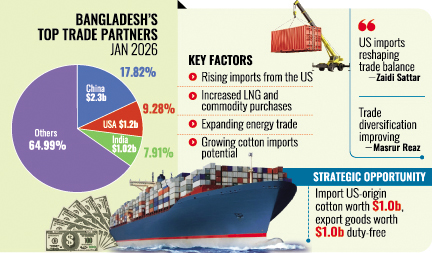
US overtakes India in Bangladesh trade
The United States has overtaken India as Bangladesh's second-largest trading partner in January, driven by a surge in imports from the world's largest economy. While China continues to dominate Bangladesh's trade landscape, the shift highlights changing import patterns and growing economic ties with the US, though analysts say the trend may not yet be firmly established. India consistently holding the position of the second-largest trading partner. However, in January, the US moved ahead of India, pushing it into third place.
The Business Standard
Ctg RMG factories hit by nearly half-shift load shedding; costs rise 20%
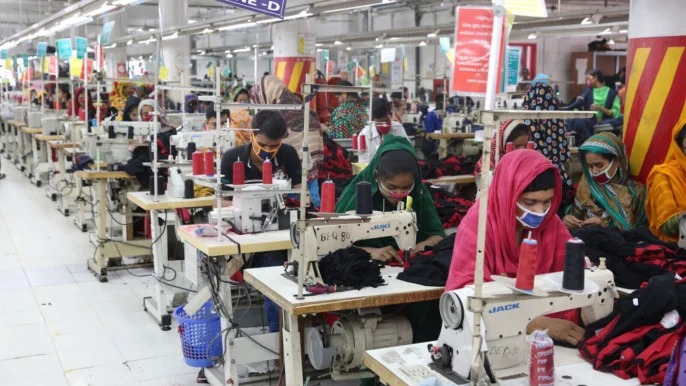
Bangladesh's readymade garment sector in Chattogram is facing mounting pressure as prolonged load shedding and rising fuel costs disrupt production, with factory owners claiming a sharp increase in expenses and growing risks to export orders. Former BGMEA vice-president Rakibul Alam Chowdhury said factories are increasingly dependent on alternative fuel sources due to load shedding, driving up production costs. "Over the past two months, rising freight charges, higher container handling costs at inland container depots, and increased transport fares have pushed overall production costs up by more than 20%," he said.SM Abu Tayyab, BGMEA director and president of the Chattogram chapter of the International Business Forum of Bangladesh, warned that the prolonged crisis could severely impact the export earnings. "If the situation continues, small and medium-sized factories may be forced to shut down, leaving hundreds of thousands of workers unemployed," he said.
আজকের পত্রিকা
আমদানি-রপ্তানি খাত: দফায় দফায় মাশুল বৃদ্ধি, চাপে ব্যবসা
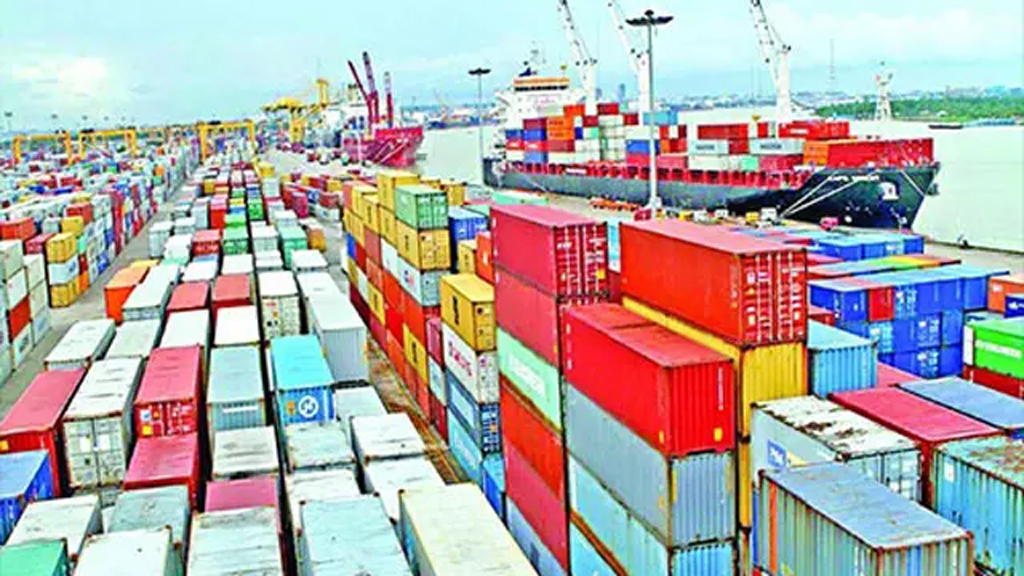
দেশের আমদানি-রপ্তানিসংশ্লিষ্ট প্রায় সব খাতে গত কয়েক মাসে দফায় দফায় মাশুল ও ভাড়া বৃদ্ধির ফলে চাপে পড়েছেন ব্যবসায়ীরা। বেসরকারি কনটেইনার ডিপো (আইসিডি), চট্টগ্রাম বন্দর, শিপিং লাইন, পরিবহন ও লাইটারেজ—প্রায় প্রতিটি খাতেই উল্লেখযোগ্য হারে ব্যয় বেড়েছে। সংশ্লিষ্টদের আশঙ্কা, এই অতিরিক্ত ব্যয়ের পুরো চাপ শেষ পর্যন্ত গিয়ে পড়বে ভোক্তার ওপর, যার ফলে বাড়তে পারে নিত্যপ্রয়োজনীয় পণ্যের দাম। ব্যবসায়ীরা বলছেন, একের পর এক মাশুল বৃদ্ধির ফলে ব্যবসা টিকিয়ে রাখাই এখন কঠিন হয়ে পড়েছে। দ্রুত পরিস্থিতির উন্নতি না হলে এর প্রভাব দীর্ঘ মেয়াদে অর্থনীতিতে নেতিবাচক প্রভাব ফেলতে পারে। বিজিএমইএর সাবেক সহ-সভাপতি রাকিবুল আলম চৌধুরী বলেন, ‘বন্দর ও ডিপোর ট্যারিফ বৃদ্ধির চাপ সামাল দেওয়ার আগেই আন্তর্জাতিক শিপিং ভাড়া বেড়েছে। এতে বৈশ্বিক বাজারে প্রতিযোগিতা কঠিন হয়ে পড়েছে।’
The New Age
Experts for trade accords to address global crisis
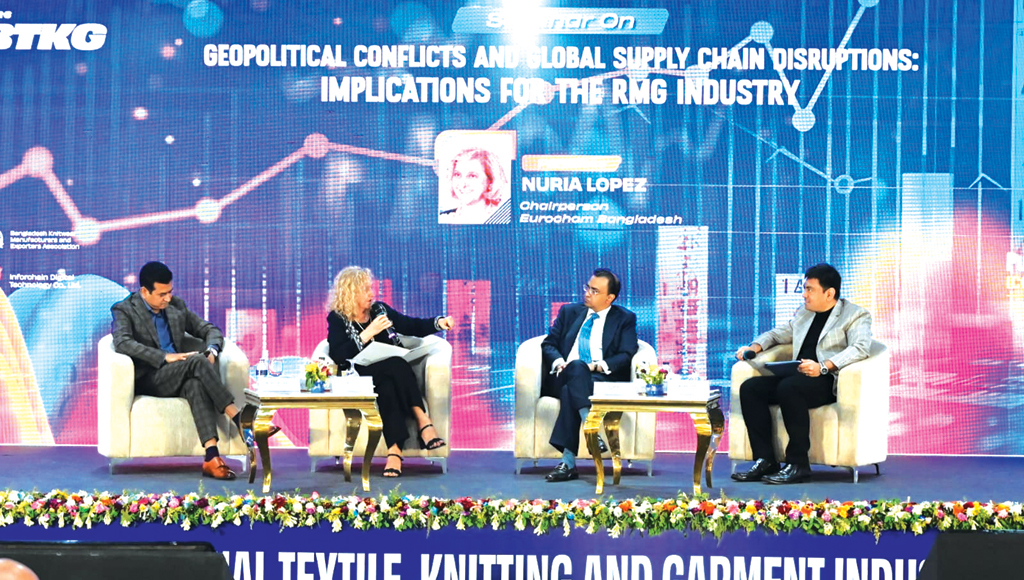
Bangladesh’s readymade garment sector has been facing a narrowing window to sustain long-term competitiveness amid global crises, shifting trade rules, and rising costs, experts said on Saturday. They also noted that geopolitical tensions and structural weaknesses could further deepen financial pressure, disrupt supply chains, and reduce future orders from key export destinations.To address these challenges, they stressed the need for long-term trade agreements, strengthening energy security through renewable solutions, and improving access to affordable finance. They revealed it at the closing ceremony of the Bangladesh International Textile, Knitting and Garment Industry Exhibition (BTKG) 2026, jointly organised by the Bangladesh Knitwear Manufacturers and Exporters Association and Inforchain Digital Technology Co Ltd.